E-moto guide

Design custom e-moto battery packs that fit the chassis and survive the real build.

BatteryBee is useful when the battery is not just a brick. Think removable chassis packs, rebuilds, upgraded range packs, and custom light-EV enclosures where retention, service access, and manufacturability matter as much as nominal dimensions.
Best fit: custom light-EV packs. The more the pack has to fit a real chassis, latch, rail, or service strategy, the more useful BatteryBee becomes.

What to solve before fabrication

  • Insertion path and removable-pack retention
  • Fuse, contactor, BMS, and cable packaging
  • Service access and connector location
  • Spacer, case, and build-volume manufacturability
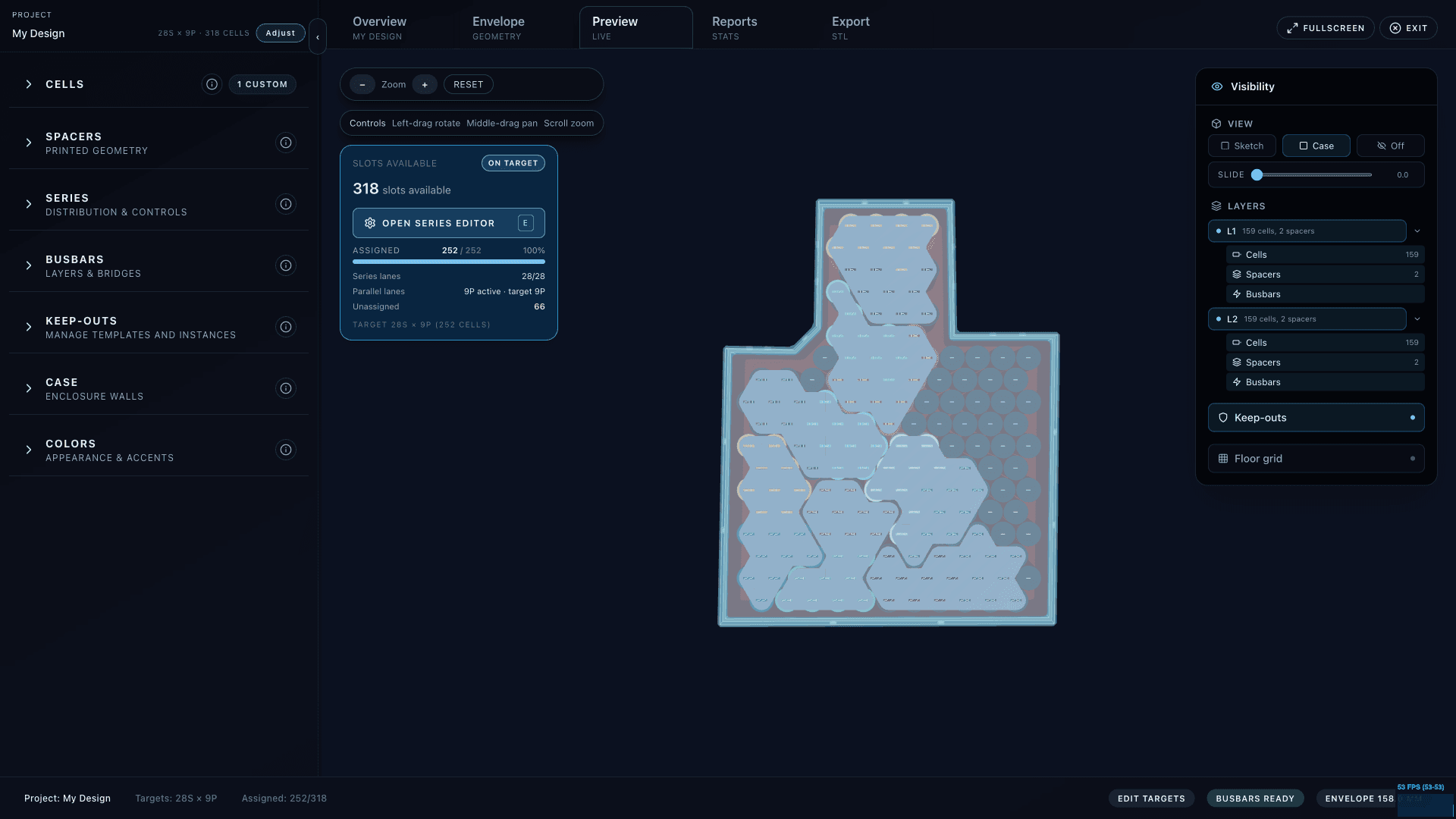
BatteryBee 3D preview for a custom light-EV battery pack
Use the 3D view to validate fit, access, and packaging before fabrication

Where BatteryBee helps most

The value is in keeping geometry, electrical targets, and build outputs connected while you are still making packaging decisions for a real light-EV chassis.

Removable chassis packs

Plan around latch geometry, rails, handles, and insertion paths before the enclosure becomes too big or too awkward to service.

Rebuilds and upgraded range packs

Fork the design, adjust targets, and keep the geometry tied to the exact revision you intend to build instead of guessing from old measurements.

Pack protection and routing

Leave room for fuses, contactors, BMS hardware, cable exits, and strain relief so the case is still usable after assembly.

Recommended workflow

  1. Trace the real chassis cavity or removable pack envelope, not the idealized pack size you wish you had.
  2. Reserve keep-outs for latch hardware, rails, mounting bosses, cable turns, and service access before finalizing the cell stack.
  3. Set the cell format and S/P goals so the electrical target and packaging problem move together.
  4. Validate insertion path, connector access, and pack height in the 3D preview before you print spacers or machine the enclosure.
  5. Export only the revision you are actually ready to build and keep that revision locked for fabrication.

Reality checks

  • Can the pack be inserted and removed without fighting the frame, rails, or latch hardware?
  • Is the enclosure designed for vibration, cable strain relief, and real-world abuse rather than just static fit?
  • Did you leave room for the BMS, fuse, contactor, and any isolation or padding you plan to use?
  • If you need segmented or glued spacer assemblies, is that acceptable for the build and clearly communicated?
  • If the design changes later, do you still have the original snapshot for the pack you sold or intend to assemble?

Ready to test the workflow?

Start with the free workspace, validate the pack in 3D, and export only the revision you would actually trust yourself to build or sell.